





By Simeon Shodimu

A new global report has raised fresh concerns over the escalating impact of extreme heat on agriculture, warning that rising temperatures are rapidly reshaping food systems and threatening the livelihoods of over a billion people across vulnerable regions.
Emergence of extreme is one of the most disruptive forces confronting global agriculture, with a new joint report sounding the alarm over its far-reaching consequences on food systems, labour productivity, and rural livelihoods.
The report, jointly released by the Food and Agriculture Organization (FAO) and the World Meteorological Organization (WMO) to mark this year’s Earth Day on April 22, paints a stark picture of how rising temperatures are increasingly defining the realities of farming, particularly across tropical Sub-Saharan Africa and parts of Central and South America.
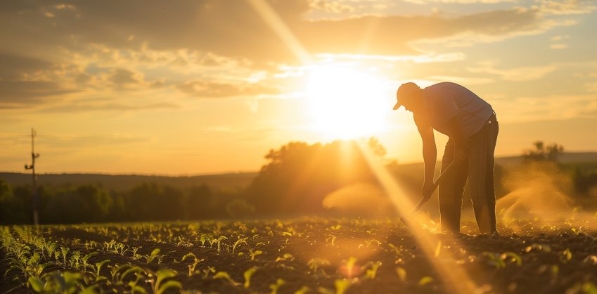
According to the findings, more than a billion people are now exposed to severe heat events that threaten not only their health but also their ability to work and sustain agricultural production. Nowhere is this more evident than in the agri-food sector, where farmers and agricultural workers are on the frontlines of climate stress.
The report delves into the science of extreme heat, outlining its growing intensity and frequency, while examining the vulnerabilities and cascading impacts on crops, livestock, fisheries, and ecosystems. It highlights how temperature thresholds play a critical role in determining agricultural outcomes.
For livestock, heat stress begins at temperatures above 25°C, with species such as chickens and pigs being particularly vulnerable due to their inability to regulate body temperature through sweating. Crop production is equally at risk, with yields for major staples declining once temperatures exceed 30°C—though some crops like potatoes and barley begin to suffer at even lower levels.
Beyond farms, the report establishes a strong link between prolonged heatwaves and the increasing incidence of wildfires, noting that fire seasons are becoming longer and more intense, further compounding environmental and agricultural losses.
However, the report also outlines a pathway forward, emphasising the urgent need for adaptive strategies. These include the development of heat-resilient crop varieties and livestock breeds, adjustments to planting calendars, and improved farm management practices designed to shield production systems from extreme conditions.
Central to these adaptation efforts is the deployment of early warning systems, which the report identifies as critical tools for helping farmers anticipate and respond to heat events. Climate services, including seasonal forecasts, are also highlighted as essential in guiding decision-making in an increasingly unpredictable climate.
Equally important is access to financial support mechanisms. The report underscores the role of cash transfers, agricultural insurance, and shock-responsive social protection schemes in enabling farmers to absorb and recover from climate-related shocks.
Speaking on the findings, FAO Director-General Qu Dongyu described extreme heat as a “major risk multiplier,” warning that it is placing mounting pressure on natural resources and the communities that depend on them.
Echoing this concern, WMO Secretary-General Celeste Saulo noted that extreme heat is no longer an isolated hazard but a compounding force that amplifies existing weaknesses across agricultural systems. She stressed the importance of strengthening early warning systems and climate services to help societies adapt to what she termed a “new reality.”
As climate change accelerates, the report makes clear that without urgent and coordinated action, extreme heat could undermine global food security and deepen vulnerabilities in already fragile regions.