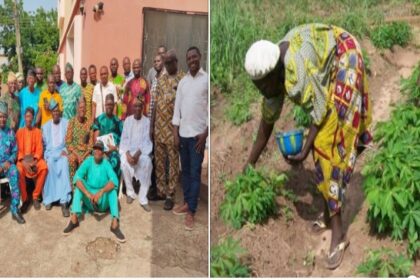





By Lanre Shodimu

Nigeria’s agricultural sector heavily relies on rainfall, which, when sufficient, yields bountiful harvests and supports the livelihoods of countless farmers. However, the increasing unpredictability of rainfall patterns due to climate change poses a significant threat to farming activities nationwide. As global temperatures rise, the consequences of climate change, such as droughts, floods, and erratic weather conditions, are felt across the country, further complicating agricultural planning and productivity.
The variability in rainfall across different regions of Nigeria adds another layer of complexity. Some areas experience heavy downpours that can lead to flooding and soil erosion, while others face severe droughts that wither crops and deplete water sources. This inconsistency not only affects crop yields but also impacts food security and the overall economy.
To mitigate these challenges, it’s crucial for Nigeria to adopt climate-resilient agricultural practices. This includes investing in irrigation systems, promoting drought-resistant crop varieties, and implementing sustainable farming techniques that preserve soil health and conserve water. By embracing these strategies, Nigerian farmers can better adapt to the changing climate, ensuring a more stable and productive agricultural sector for the future.
Overview of the Rainy Season in Nigeria.
Withinnigeria.com establishes that the rainy season in Nigeria is a crucial period that shapes the country’s climate, agriculture, and daily life. Typically lasting from April to October, this season brings much-needed precipitation to the West African nation. During this time, Nigeria experiences a significant increase in rainfall, humidity, and cloud cover, transforming its landscape and affecting various aspects of society.
Nigeria’s rainy season is characterized by frequent and often heavy downpours. The southern regions, particularly the coastal areas, receive more rainfall than the northern parts of the country. Lagos, for example, can experience up to 1,800mm of rainfall annually, with most of it occurring during the rainy season.
The rainy season in Nigeria plays a vital role in the country’s agricultural sector. It marks the beginning of the growing season for many crops, including staples like yams, cassava, and maize. Farmers rely on this period to cultivate their lands and ensure food security for the nation.
While the rainy season is a general phenomenon across Nigeria, its intensity and duration can vary depending on geographical location. The southern regions typically experience longer and more intense rainy seasons compared to the northern areas, which tend to have shorter and less pronounced wet periods.
The Food and Agriculture Organisation (FAO) has described this growing crisis as a matter of urgent national concern.
At the BusinessDay Agriculture Conference, held on March 27, 2025, Bamikole Sunday, Managing Director of Premium Cocoa Products Ile-Oluji Ltd, emphasized the critical need to achieve the United Nations Sustainable Development Goal 2 (SDG-2)—eliminating hunger by 2030.
In a March 27, 2025, businessday.ng/agriculture, Bamikole pointed out that 80% percent of Nigerian farmers depend on rain-fed agriculture, leading to significant vulnerability to climate change.
Furthermore, post-harvest losses account for 40-45 percent of agricultural produce, with nearly 70 percent of Nigeria’s agricultural output being exported as raw materials.
These challenges, compounded by food inflation and a weak value chain, have fueled the ongoing food insecurity crisis in the country, according to Bamikole.
The Rain variation accross various region of Nigeria:
The rainy season in Nigeria varies across different regions due to the country’s diverse climate. In the southern parts of Nigeria, including coastal areas, the rainy season typically begins earlier and lasts longer. Here, you can expect two distinct rainy periods: a longer one from April to July and a shorter one from September to November.
In contrast, the northern regions experience a single, more concentrated rainy season. This usually starts in June and continues through September. The central areas of Nigeria often see a transitional pattern, with rainfall beginning around May and lasting until October.
Accordingly withinnigeria.com stated that;
Southwest: Lagos and surrounding areas experience heavy rainfall from April to October.
Southeast: States like Enugu see consistent rain from March to November.
North-Central:
The Middle Belt region, including Abuja, has rains from April to October.
Far North: Areas like Kano have a shorter rainy season, typically from June to September.
Regional Variations:
It’s important to note that the timing and intensity of these seasons can vary across Nigeria’s diverse landscape. The southern regions generally experience longer and more intense rainy seasons, while the northern areas have shorter rainy periods and longer dry spells.
Understanding these seasonal patterns is essential for planning agricultural activities, managing water resources, and preparing for potential weather-related challenges in Nigeria.
Climate change:
Climate change is having a significant impact on the rainy season in Nigeria, altering traditional weather patterns and affecting agriculture, water resources, and livelihoods. As global temperatures rise, Nigeria is experiencing shifts in rainfall distribution and intensity, leading to more frequent extreme weather events.
The rainy season in Nigeria is becoming increasingly unpredictable. Some regions are experiencing shorter rainy seasons with more intense rainfall, while others face prolonged dry spells. These changes are disrupting traditional farming practices and threatening food security in a country heavily reliant on rain-fed agriculture.
More intense rainfall during the rainy season in Nigeria is leading to increased flooding in urban and rural areas. This not only damages infrastructure but also causes soil erosion, affecting agricultural productivity and water quality. Coastal regions are particularly vulnerable to these impacts, with rising sea levels exacerbating the problem.
To address these challenges, Nigeria is implementing various adaptation strategies. These include improved water management systems, drought-resistant crop varieties, and early warning systems for extreme weather events. However, more comprehensive measures are needed to ensure long-term resilience to the changing climate and its effects on the rainy season.
Temperature
During the rainy season in Nigeria, temperatures typically remain moderate but can vary significantly across different regions of the country. The influx of moisture-laden air during this period plays a crucial role in regulating temperatures throughout Nigeria.
Coastal Areas
In coastal areas, the rainy season brings slightly cooler temperatures compared to the dry season. You can expect average daytime highs around 28-30°C (82-86°F), with nighttime lows rarely dropping below 22°C (72°F). The increased cloud cover and frequent rainfall help moderate the heat in these humid regions.
Inland Areas
As you move inland, temperatures during the rainy season in Nigeria can be more variable. Northern states may experience daytime highs of 30-35°C (86-95°F), while central regions typically see temperatures ranging from 25-30°C (77-86°F). Nighttime temperatures in these areas can dip to around 20°C (68°F), providing some relief from the daytime heat.
Temperature Fluctuations
It’s worth noting that sudden temperature drops often accompany heavy rainstorms, particularly in the afternoons. These brief cooling periods can be a welcome respite from the otherwise warm and humid conditions characteristic of Nigeria’s rainy season.
The Rainfall conundrum:
Year after year, rainfall in some parts of Nigeria has been highly inconsistent. Typically, Lagos experiences rainfall from March to June, followed by heavy showers in August. However, this year has seen a drastic change, with scanty showers and a prolonged dry spell, blurring the lines between the wet and dry seasons.
Navigating the Rainfall conundrum:
As Nigeria grapples with the challenges of climate variability, farmers must adapt to the unpredictable rainfall patterns. Effective navigation of the rainfall conundrum is crucial for sustainable farm life and food security. Here are some practical tips to help farmers overcome the uncertainty and thrive in the face of changing weather conditions.
To effectively navigate the challenges posed by unpredictable rainfall patterns in agriculture, agriculture. com. ph provides the following:
Crop Management:
a) Choose Resilient Crops: Select crops that are well-suited to the conditions of the rainy season, such as rice, edible fern, and okra. These crops can withstand heavy rain and waterlogged soil conditions.
b) Crop Diversification: Diversify your crops to mitigate risks associated with rainfall variability. This can include planting multiple crop types or using agroforestry practices.
Soil Conservation:
a) Improve Drainage: Create ditches or furrows to channel excess water away from crops, preventing waterlogging and root rot.
b) Cover Crops: Plant cover crops like legumes (cowpeas, mung beans, and pigeon peas) to protect soil from erosion and improve soil structure.
Farm Infrastructure:
a) Shade Nets: Use shade nets to protect crops from heavy rainfall, strong winds, and pests. These nets can provide a physical barrier that withstands wind forces and reduces soil erosion.
b) Windbreakers: Plant natural windbreakers like trees or bushes around the perimeter of your crop field to reduce wind speed and provide shelter for crops.
Water Management:
a) Rainwater Harvesting: Collect and store rainwater for irrigation during dry periods, reducing dependence on unpredictable rainfall.
b) Efficient Irrigation: Implement efficient irrigation systems to optimize water use and minimize waste .
Additional Strategies:
a) Monitor Weather Forecasts: Stay informed about weather patterns and forecasts to plan farming activities accordingly.
b) Climate: Smart Agriculture: Adopt practices that enhance soil health, promote efficient water use, and support biodiversity.
By implementing these strategies, farmers can better navigate the challenges posed by unpredictable rainfall patterns and promote sustainable agricultural practices.