




By Jide Akinseye

In a decisive push to reposition agriculture as a cornerstone of national development, key stakeholders across government, research institutions, development organisations, and the private sector convened in Abuja for a high-level policy dialogue aimed at accelerating Nigeria’s agri-food systems transformation.
The engagement, themed “Expanding Partnerships for Transformative Impact: A Policy Dialogue to Accelerate Nigeria’s Agri-Food System Transformation,” brought together a broad coalition of actors committed to strengthening collaboration, deepening evidence-based policymaking, and ensuring coordinated implementation across the agricultural value chain.
Convened by the International Food Policy Research Institute (IFPRI), the International Institute of Tropical Agriculture (IITA), and other civil society partners, the forum comes at a critical moment as Nigeria advances key frameworks such as the National Agricultural Technology and Innovation Policy (2022–2027) and the National Development Plan (2021–2025). These frameworks are expected to drive inclusive growth, enhance food security, and build climate resilience.
Participants acknowledged that while Nigeria possesses a wealth of policy-relevant research, a persistent gap remains in translating evidence into actionable policies and tangible outcomes. The dialogue, therefore, served as a strategic platform to bridge this divide, fostering collaboration, shared learning, and co-creation of practical solutions aligned with national priorities.
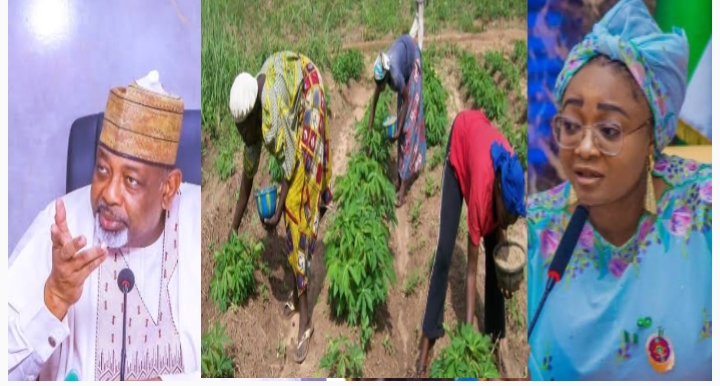
Delivering a goodwill message, the Minister of Agriculture, Abubakar Musa, underscored the importance of data-driven decision-making and called for stronger partnerships with development actors and the private sector.
He noted that government alone cannot drive the scale of transformation required, stressing the need for an enabling environment that encourages investment while empowering youth and women across the agricultural value chain.
Similarly, the Minister of Women Affairs, Imaan Sulaiman-Ibrahim, emphasised the centrality of gender inclusion in achieving sustainable food systems. She called for intentional integration of women in agricultural policy design and implementation, urging stakeholders to move beyond production to include packaging, branding, and market access.
According to her, women’s economic empowerment remains a largely untapped driver of growth, adding that policies must evolve into real-time platforms capable of delivering measurable value across the entire value chain.
Providing further insight, CGIAR Country Convener in Nigeria, Aline Mugisho, outlined the vision behind the Policy Innovation Hub — a platform designed to make policymaking more inclusive, responsive, and grounded in real-world needs.
She explained that the initiative seeks to bridge the disconnect between technical expertise and grassroots realities by creating a “one-stop” system where policies are not only designed but tested and refined based on practical conditions. The approach, she said, would enhance productivity, strengthen food systems, and ensure that interventions are both sustainable and impactful.
Mugisho also highlighted the importance of private sector participation, particularly in scaling innovations and driving investment, noting that successful transformation would depend on intentional, demand-driven collaboration among all stakeholders.
On his part, IFPRI Country Programme Leader in Nigeria, Oliver Kirui, described the dialogue as both timely and strategic. He pointed to the wide representation from multiple government ministries, international organisations, and development partners as evidence of growing momentum toward coordinated action.
Kirui stressed that the dialogue marked a shift from routine engagements to outcome-driven collaboration, with stakeholders identifying priority areas for immediate and long-term intervention. He added that sustained engagement, rather than one-off meetings, would be critical in translating policy discussions into measurable impact.
The forum concluded with a renewed commitment among participants to move beyond fragmented efforts and embrace a unified, evidence-driven approach to agricultural transformation — one that ensures policies are not only well-designed but effectively implemented to deliver tangible benefits for farmers, businesses, and communities across Nigeria.