



Jide Akinseye

As global demand for cocoa and coffee accelerates, driven by evolving consumer tastes and expanding markets, Africa’s smallholder farmers—the backbone of production—are sounding the alarm over deepening economic hardship. Beneath impressive growth projections lies a widening disconnect between booming global valuations and the fragile realities at the farm gate.
As it seems, global commodity markets, cocoa and coffee are enjoying a moment of remarkable optimism. Rising demand for premium chocolate in Europe and surging coffee consumption in Asia are pushing industry valuations toward historic highs. Yet, thousands of miles away in Africa’s farming communities, the story is far less sweet.
For many of the continent’s smallholder farmers, who produce a significant share of the world’s cocoa and coffee, the so-called boom feels more like a deepening crisis.
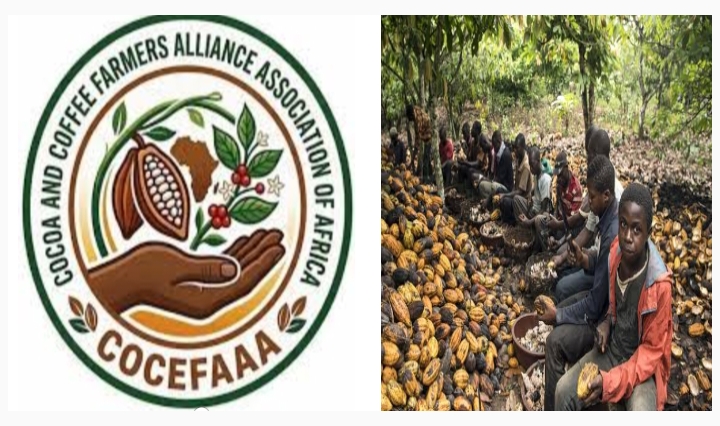
The Cocoa and Coffee Farmers Alliance Association of Africa (COCEFAAA) has raised urgent concerns that the impressive global growth figures are masking a structural imbalance—one that leaves producers exposed to volatile prices while others in the value chain reap the rewards.
According to the association’s Global President, Adeola Adegoke, the numbers tell a compelling story of expansion. The global cocoa and chocolate market is projected to surge from about $169 billion in 2025 to nearly $246 billion by 2031. Meanwhile, the coffee industry is expected to grow from roughly $284 billion today to an estimated $486 billion by 2035.
But behind these figures lies a troubling paradox.
Despite rising global demand, farmer incomes remain unstable and, in many cases, insufficient to cover production costs. Smallholders—who form the backbone of Africa’s output—continue to grapple with unpredictable pricing systems that offer little protection against market shocks.
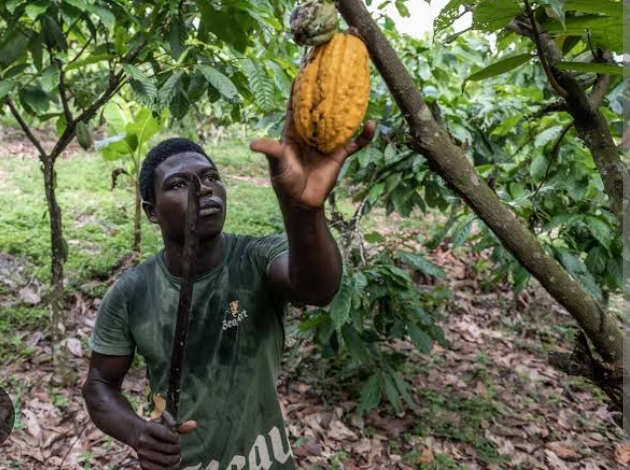
In rural communities across West, East, and Central Africa, the consequences are stark. Farmers report struggling to afford basic inputs such as fertilisers, labour, and improved seedlings. Household pressures are mounting, with some families forced to withdraw children from school or cut back on essential healthcare as incomes fluctuate.
COCEFAAA describes these farmers as “economic shock absorbers” within the global supply chain—bearing the brunt of price drops while seeing minimal gains during market upswings. This imbalance, the group warns, threatens the long-term sustainability of the industry itself.
Compounding the economic strain is the growing impact of climate change. Rising temperatures and erratic rainfall patterns are already reducing yields in traditional growing regions. In response, some farmers are migrating to higher altitudes, while others are abandoning cultivation altogether.
At the same time, the industry is gradually shifting toward more climate-resilient crop varieties, such as Fine Robusta coffee. While this transition offers new opportunities, it also presents challenges for farmers who lack the resources and technical support needed to adapt.
Without meaningful intervention, COCEFAAA cautions that the consequences could extend beyond individual livelihoods. Declining farmer incomes may ultimately reduce production capacity, destabilising global supply chains and undermining the very growth projections that currently define the sector.
To avert this outcome, the association is advocating for a set of far-reaching reforms.
Central to its recommendations is increased investment in agricultural research and development, particularly in drought-resistant and pest-resistant crop varieties. Such innovations, it argues, are critical to building resilience in the face of climate change.
Equally important is the need to expand local processing and value addition within Africa. By developing domestic roasting and cocoa processing industries, producing countries can retain a greater share of the value currently captured overseas.
COCEFAAA also emphasises the importance of stronger regional cooperation among African nations. By working together, producing countries could improve their collective bargaining power and reduce vulnerability to global price fluctuations.
Beyond policy changes, the organisation is calling on international buyers and manufacturers to rethink their engagement with farmers. Long-term purchasing agreements that guarantee stable and livable incomes, alongside investments in training, inputs, and climate adaptation, are seen as essential steps toward a more equitable supply chain.
There is also a strategic push to diversify trade relationships. With demand rising in emerging markets such as Asia and India, African producers have an opportunity to reduce reliance on traditional markets and build more stable export channels.
Ultimately, the message from Africa’s cocoa and coffee farmers is clear: growth alone is not enough.
Adegoke and his association insist that the future of the industry depends not just on expanding markets, but on ensuring that prosperity reaches those at the very start of the value chain.
Until that happens, the global cocoa and coffee boom risks remaining what it already is for many farmers—a promise unfulfilled.