



By Jide Akinseye

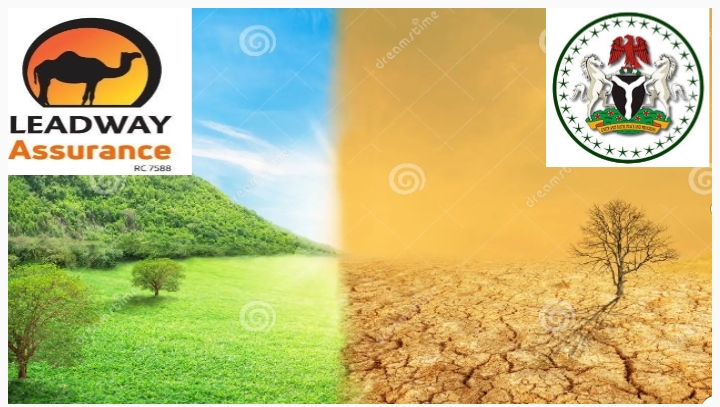
As climate volatility continues to threaten Nigeria’s already fragile food systems, stakeholders are deepening the use of risk management tools to protect farmers and sustain production. A fresh insurance payout to smallholder farmers signals growing momentum toward cushioning agricultural losses and strengthening resilience across vulnerable regions.
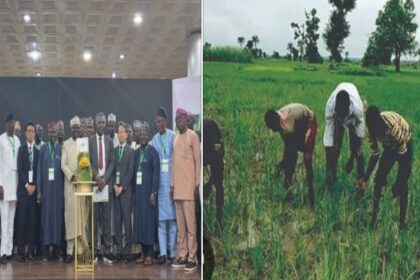
In a decisive effort to shield farmers from the harsh realities of climate change, PUNCHONLINE of April 23, 2026 learnt that Leadway Assurance, in collaboration with the Presidential Food Systems Coordinating Unit and PULA Advisors, has disbursed N396.7 million in insurance claims to smallholder farmers across four states.
The payout, announced at the 2025 Wet Season Insurance Pay-out Ceremony under the National Agribusiness Planning Mechanism in Abuja, reached farmers in Plateau, Borno, Kaduna, and Taraba states—areas significantly impacted by erratic weather patterns and climate-induced risks.
A closer look at the figures reveals stark disparities in losses across the regions. Farmers in Borno State received N127.19 million, while Taraba State accounted for the highest share at N154.31 million. Kaduna farmers were paid N69.73 million, and Plateau State received N45.47 million, reflecting varying degrees of climate impact on agricultural output.
The intervention underscores a growing shift toward agricultural insurance as a critical safety net—one that not only mitigates losses but also prevents farmers from falling deeper into poverty after adverse farming seasons.
Speaking at the event, the Chief Executive Officer of Leadway Assurance, Gboyega Lesi, described agriculture as inherently vulnerable to environmental forces, noting that insurance plays a vital role in sustaining rural livelihoods.
“Agriculture is inherently exposed to the elements, but through the strategic application of climate insurance, we are ensuring that a bad season does not lead to a total loss of livelihood,” he said.
Lesi highlighted the importance of collaboration, commending the coordinating role of the Presidential Food Systems Coordinating Unit in aligning the initiative with Nigeria’s broader food security agenda. He also acknowledged PULA Advisors for its expertise in risk assessment and yield data, which ensures transparency and accuracy in claims disbursement.
Beyond immediate relief, Lesi noted that insights from the payout exercise would inform future strategies. According to him, the data collected serves as a blueprint for improving insurance accessibility and effectiveness for farmers ahead of subsequent planting seasons.
“This payout is a testament to the hard work of our farmers and their foresight in embracing insurance,” he added, stressing the company’s commitment to leveraging innovation and technology to expand coverage.
He further emphasised that the initiative represents a broader public-private effort to strengthen Nigeria’s agricultural resilience amid growing climate uncertainty.
Also speaking, the Global Head of Agricultural Risk Solutions at Leadway Assurance, Fatona Ayoola, underscored the importance of timely claims payments in building trust among farmers.
“At Leadway Assurance, we view agricultural resilience as vital to Nigeria’s food security. Empowering farmers to recover, rebuild, and reinvest fosters the confidence needed to sustain production,” she said.
The payout marks another step in Nigeria’s gradual transition toward data-driven, climate-smart agriculture—where insurance is increasingly seen not just as a financial tool, but as a cornerstone for long-term food security and rural stability.