




By Simeon Shodimu

Nigeria is intensifying efforts to position its northern agricultural corridor as a major destination for global climate finance, as government officials, development agencies and international investors push for large-scale funding to support climate-resilient farming systems.
At the centre of the initiative is the Value Chain Programme in Northern Nigeria (VCN), a strategic intervention designed to strengthen agricultural productivity while helping vulnerable farming communities adapt to the growing threats posed by climate change.
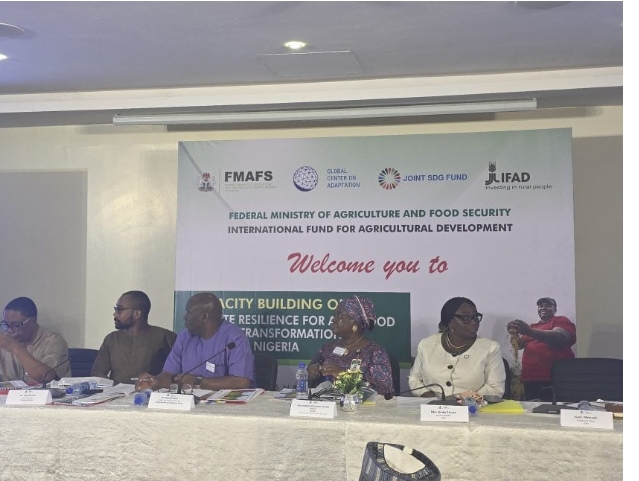
The renewed drive gained momentum during a high-level capacity-building workshop on climate risk, adaptation and climate finance mobilisation held recently in Abuja where policymakers and development partners outlined plans to unlock financing from multilateral climate funds and private sector investors.
Stakeholders at the meeting agreed that climate adaptation in agriculture can no longer rely solely on government funding, stressing that Nigeria must begin to present its agricultural value chains as profitable, investment-ready and scientifically de-risked to attract global capital.
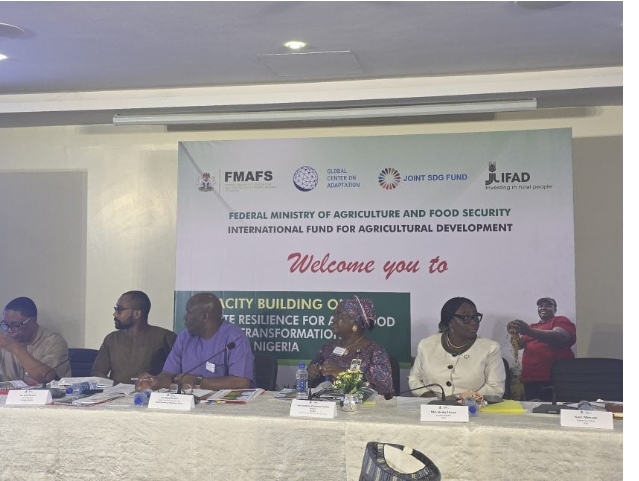
Country Director of the International Fund for Agricultural Development (IFAD) in Nigeria, Ms. Dede Ekoue, disclosed that the VCN programme has already moved from the planning stage into implementation following the approval of a joint roadmap and the release of the first tranche of funding.

According to her, while the initial investment would support early climate-resilient interventions across northern Nigeria, sustained progress would depend heavily on the country’s ability to mobilise significantly larger pools of climate finance.
She noted that international funding institutions and environmental, social and governance (ESG) investors are increasingly demanding measurable outcomes and evidence-based planning before committing resources.
Ekoue explained that Nigeria is already integrating Climate Risk and Vulnerability Assessments (CRAVA) into the programme’s implementation strategy to identify fragile ecological zones and guide adaptation measures.
The assessments, she said, are helping to shape interventions such as solar-powered irrigation systems for drought-prone communities and flood-resistant seed varieties for riverine farming areas frequently affected by flooding.
She added that climate-smart investments rooted in scientific data would improve investor confidence while ensuring that public resources achieve measurable resilience outcomes.
The Federal Government also reaffirmed its commitment to strengthening institutional readiness for climate financing, describing the VCN initiative as a critical response to the mounting impact of climate change on Nigeria’s food systems.
Director of the Federal Department of Development Partners Projects at the Ministry of Agriculture and Food Security, Mrs. Adebola Iluromi, said the Abuja workshop was designed to equip stakeholders with the technical capacity needed to prepare bankable investment plans aligned with both national and global climate frameworks.
She stressed that attracting climate finance involves far more than simply accessing funds.
According to her, it also requires stronger institutions, transparent planning systems and the ability to demonstrate results capable of attracting additional rounds of investment.
Iluromi warned that climate-related disruptions such as prolonged droughts, flooding, heat stress and land degradation are already placing enormous pressure on Nigeria’s agricultural sector, particularly in the northern region where millions depend directly on farming for survival.
She said collaboration between federal and state governments, development institutions and private sector actors would be vital to achieving inclusive and climate-resilient agricultural growth.
The Global Center on Adaptation (GCA), one of the programme’s major technical partners, also highlighted the urgent need to close the adaptation financing gap facing smallholder farmers across Africa.
GCA’s Global Programme Lead for Food Security and Rural Wellbeing, Dr. Olu Ajayi, noted that while agriculture remains central to economic growth and poverty reduction across the continent, the sector remains highly exposed to climate shocks.
He explained that smallholder farmers, who account for the bulk of food production in Africa, continue to face limited access to climate adaptation tools, technology and financing.
According to Ajayi, this reality has transformed climate change from an environmental issue into a direct economic and food security threat.
He revealed that GCA is currently collaborating with institutions including the African Development Bank, the World Bank, the Islamic Development Bank and IFAD to integrate climate adaptation into major agricultural investment programmes.
In Nigeria, the organisation is supporting technical studies under the VCN initiative, including climate vulnerability assessments, adaptation financing strategies and digital agriculture systems designed to improve resilience among rural farmers.
Ajayi added that GCA has supported the development of more than 30 climate-resilient agricultural investment projects across Africa and Asia within the past five years, covering 26 African countries.
Experts at the Abuja workshop maintained that Nigeria’s ability to attract private climate capital would depend largely on its capacity to demonstrate that agricultural investments in the region are both commercially viable and resilient to climate risks.
They observed that global investors are increasingly prioritising “investment-ready landscapes” where climate threats are clearly identified and mitigation measures are already embedded within project design.
The VCN programme, which spans nine northern states, is expected to become a flagship model for integrating climate adaptation into agricultural value chains while simultaneously improving productivity, food security and rural incomes.
Participants also highlighted the growing importance of digital technologies in supporting farmers, particularly through climate advisory systems capable of delivering weather information, risk alerts and farming guidance to remote communities.
As discussions continue among stakeholders, there is growing optimism that the combination of policy reforms, technical preparedness and early implementation successes could position Nigeria to attract substantially higher levels of climate finance in the coming years.
With climate pressures intensifying across the Sahel region, analysts believe the success of the initiative could extend beyond Nigeria’s borders, offering a practical model for climate-resilient agriculture throughout West and Central Africa.