


By: Lanre Shodimu

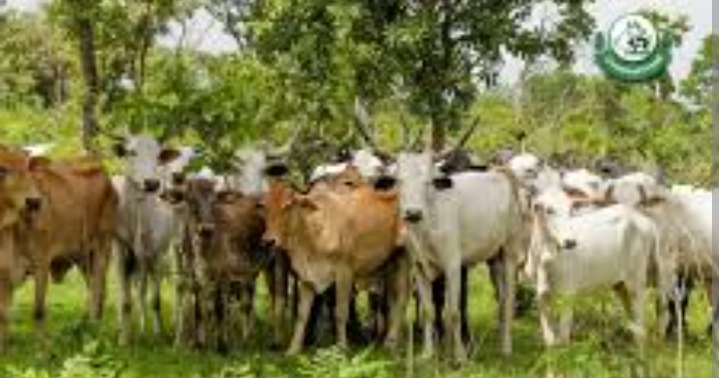
As Nigeria continues to grapple with recurring farmer-herder conflicts, food insecurity, and declining livestock productivity, the Federal Government is intensifying efforts to modernise the nation’s livestock sector through the revival of grazing reserves and ranches. The initiative, driven by the Office of the Senior Special Assistant to the President on Livestock Development in collaboration with the Ministry of Livestock Development, is expected to lay the foundation for a sustainable ranching system capable of reducing violent clashes, boosting food production, and attracting global investment into the livestock value chain.
The Federal Government has commenced the revival and modernisation of grazing reserves and ranches across Nigeria as part of efforts to curb persistent farmer-herder conflicts and reposition the livestock sector for economic growth.

The Senior Special Assistant to the President on Livestock Development, Idris Ajimobi, disclosed this on Wednesday during an interactive session with journalists in Ibadan, the Oyo State capital.
Ajimobi explained that the initiative is being carried out in partnership with the Ministry of Livestock Development and is aimed at creating a structured ranching system capable of reducing insecurity while improving livestock productivity nationwide.
According to him, work has already commenced on the Kawu Grazing Reserve in Abuja, while a nationwide audit of ranches and the country’s 417 grazing reserves is ongoing to determine facilities that can be rehabilitated and modernised before establishing new ones.
He noted that the government’s approach goes beyond merely training livestock farmers on modern practices, stressing that infrastructure development remains critical to achieving meaningful reforms in the sector.
“It’s not just about teaching farmers modern ways of farming. If we teach without providing the necessary infrastructure, we are wasting our time,” Ajimobi said.
“Our intention is to teach, revive the reserves we have, modernise them, and use them as a platform to begin the ranching system that the government wants. It has worked in other countries, and it can work in Nigeria.”
The presidential aide emphasised that the revival of grazing reserves and ranches would significantly reduce the recurring clashes between farmers and herders that have affected food production and rural livelihoods in many parts of the country.
He acknowledged that many of the existing grazing reserves are in poor condition and larger than initially anticipated, making rehabilitation efforts more challenging. However, he said the government is already engaging development partners, private investors, and members of the international community to support the projects.
“We have 417 grazing reserves, and they are more challenging than we would have thought. They are very big, but we are working on reviving them,” he stated.
Ajimobi further revealed that President Bola Tinubu’s administration remains committed to achieving food security and improving nutrition across the country, which informed the creation of a dedicated Ministry of Livestock Development.
He disclosed that the President has set an ambitious nutritional target aimed at ensuring that every Nigerian child has access to at least a sachet of milk and one egg daily.
Beyond livestock reforms, the presidential aide addressed concerns over insecurity in forests and farming communities, maintaining that the fight against kidnapping and banditry requires collective responsibility.
According to him, poverty and local complicity often create enabling environments for criminal activities, adding that community participation alongside government intervention is necessary to address insecurity effectively.
He explained that modernising livestock production and involving local residents in ranger operations would complement the efforts of the Nigerian Armed Forces in securing rural communities.
“Government has a role to play, but the communities also have a role to play. We are confident that together we can address these challenges,” he said.
Ajimobi also highlighted growing international interest in Nigeria’s livestock sector, citing several investment agreements secured under the Tinubu administration.
Among them are a $1.5 billion investment agreement with JBS, the world’s largest beef processor, a livestock and agriculture cooperation pact with France, and a £100 million dairy production and processing agreement signed during President Tinubu’s recent visit to the United Kingdom.
He further disclosed that Saudi Arabia has indicated interest in importing Nigerian bovine red meat, with discussions ongoing to facilitate future exports.
Stakeholders believe that if successfully implemented, the ranching and grazing reserve revival programme could transform Nigeria’s livestock industry into a major contributor to food security, employment generation, export earnings, and national stability.