




By Simeon Shodimu

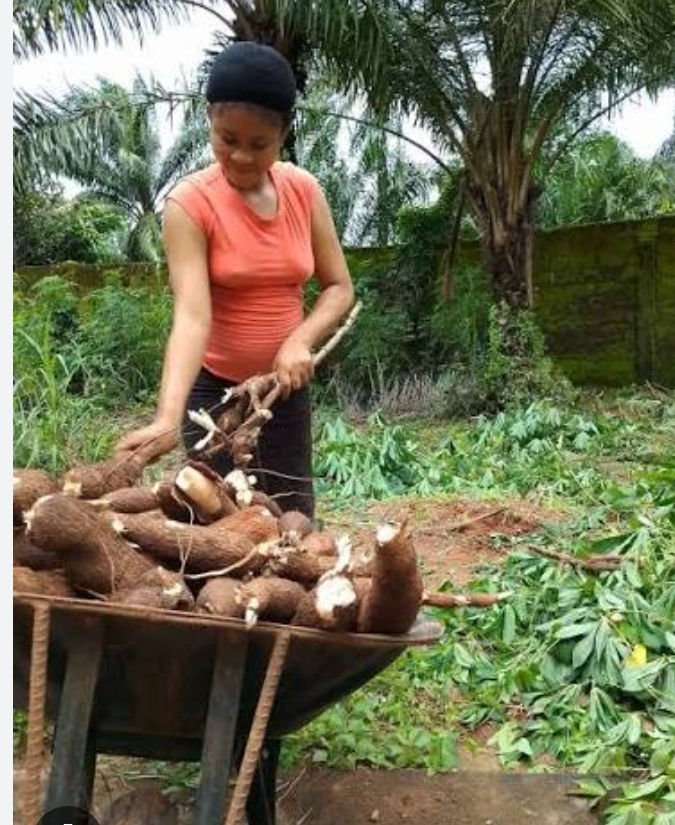
Nigeria’s cassava processing sector is grappling with a critical challenge: factories are struggling to secure enough raw materials, hampering production of starch, flour, and other by-products.
In recent years, the industry has attracted significant investment, with high-capacity processing plants emerging, supported by policies aimed at boosting industrial starch, flour, and ethanol production. On paper, the sector seemed to gain momentum. Yet, closer monitoring and evaluation reveal a different story.
Research by the Nigeria Cassava Investment Accelerator (NCIA) shows that most processing facilities operate at just 30 to 40 percent of their installed capacity, primarily due to irregular supplies of fresh tubers. While investments continue to target industrialisation, a quiet but critical problem persists: feedstock reliability remains unresolved. Without a steady supply of raw cassava, returns on processing investments continue to fall short.
The Cost of Unreliable Supply
The consequences of inconsistent cassava supply go beyond the farm. Plants running at only 40 percent capacity incur full operational costs but generate a fraction of potential revenue. Unit economics falter, debt servicing becomes burdensome, and operators are caught in a vicious cycle: poor feedstock supply undermines finances, which in turn limits investment in farmer networks that could improve supply.
Downstream businesses are also affected. Factories unable to operate consistently cannot meet buyer demands, leading to lost contracts and a weakened market reputation. At the broader market level, supply volatility creates price swings that squeeze farmers’ income during oversupply and push input costs higher when supply tightens. This instability undermines planning and erodes confidence across the cassava value chain.
NCIA notes that for investors, unreliable feedstock is the main execution risk. “A well-structured processing plant with a credible offtake can still be an unattractive investment if feedstock supply is not demonstrably reliable,” the report emphasizes.
Farmer Networks: The Backbone of Supply
Many processors aim to reduce dependence on external farmers by owning land, planting directly, and controlling supply from the ground up. Yet large-scale adoption remains challenging.
Since 2014, IDH (the Sustainable Trade Initiative) has been pioneering a “Block Farming Model” that treats farmer management as a scientific, structured process rather than an afterthought. The model organizes smallholders into managed production blocks, with a focal farm at the center. Farmers adhere to defined delivery schedules aligned with processor intake, and they receive access to inputs and finance on credit.
NCIA reports that IDH’s model has yielded tangible results: block farmers achieved yields 57 percent above the national average, increasing incomes by 81 percent. Neighboring farmers also recorded a 15 percent rise in income. Phased cropping schemes further smooth supply flows to factories, avoiding seasonal surges.
Dayo Ogundijo, IDH’s Director of Programs, explains the model’s success: “Production is tightly organized, land is contiguous, planting is synchronized, inputs are controlled, and harvesting is supervised. Scaling nationally introduces challenges in land consolidation, pre-financing capacity, management bandwidth, logistics, perishability, and trust.”
To prevent side-selling—a major threat to processor stability—Ogundijo advocates faster payments and innovative loyalty mechanisms. “Farmers need to feel genuinely valued. Building trust and ensuring transparency are key.” He adds that structured incentives, bundled services, predictable pricing, and input-credit recovery are essential for sustainable engagement.
The Foundation for Industry Growth
Cassava processing economics rely on scale: moving from 40 to 80 percent capacity can mean the difference between loss and profitability. Reliable farmer networks are crucial to closing this utilisation gap. For investors, projects backed by consistent feedstock supply represent lower-risk opportunities.
Strengthening farmer networks is a faster and more controllable solution than relying solely on technology or policy reform. This infrastructure supports multiple industrial applications, from garri to bioethanol. To transform Nigeria’s cassava sector into a true industrial powerhouse, the focus must shift from factory floors to the farms that feed them.