
By Simeon Shodimu

As concerns grow over inefficiencies and misplaced priorities in Nigeria’s agricultural sector, the Edo State Government is taking bold steps to restore credibility and impact by focusing on real farmers and evidence-based planning.

The Edo State Government has intensified efforts to reposition agriculture by eliminating what it describes as “political farming” and replacing it with a structured, data-driven system that prioritises genuine farmers.
The State Commissioner for Agriculture and Food Security, Jerry Uwangue, disclosed this during a recent field engagement with farmers across key agrarian communities in Edo North.
According to him, the initiative is part of a broader strategy to interface directly with real farmers, understand their challenges, and ensure that government interventions are no longer diverted by politically connected individuals or middlemen.
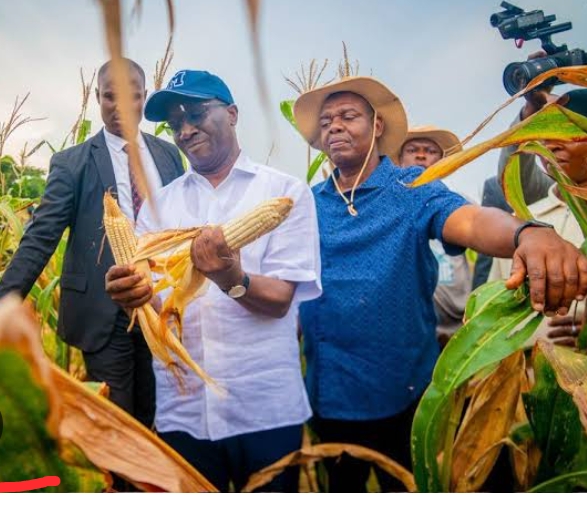
Uwangue explained that the ongoing farmer profiling exercise will form the backbone of a new agricultural framework designed to promote inclusion, transparency, and efficiency in the sector.
He noted that the engagement also provided an opportunity to communicate the agricultural policy direction of Governor Monday Okpebholo, while gathering firsthand data to support practical and impactful reforms.
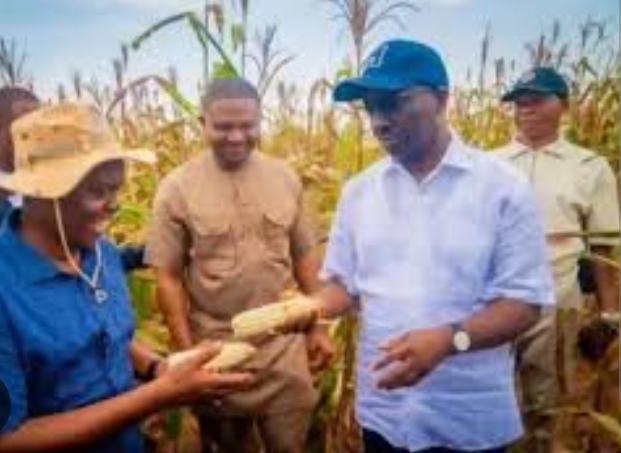
The commissioner, alongside key ministry officials, toured several agrarian corridors, including Akoko-Edo, Etsako East, Etsako Central, Etsako West, Owan East, and Owan West, where they held interactive sessions with farmers.
A central pillar of the government’s strategy is the introduction of a cluster farming model—an integrated system aimed at improving productivity through shared infrastructure, economies of scale, and coordinated support services.
Under this model, the government plans to facilitate land clearing, structured farmland allocation, access to inputs, mechanisation services, irrigation support, and enhanced security for agricultural investments.
“We urge farmers to key into the ongoing profiling exercise and embrace the cluster farming model,” Uwangue said, emphasising the administration’s commitment to grassroots agricultural transformation across all 18 local government areas of the state.
During the engagements, farmers acknowledged past government interventions but highlighted persistent challenges, including poor market pricing, insecurity, and limited access to farm inputs.
Many described the outreach as unprecedented, noting it was the first time a commissioner had visited farmers across multiple local governments to engage them directly and take deliberate steps toward ensuring transparency in the distribution of agricultural support.
In response to these concerns, the commissioner revealed plans to establish modern storage and aggregation facilities across Edo’s three senatorial districts. These facilities are expected to significantly reduce post-harvest losses and stabilise market prices.
Additionally, the government is pursuing strategic partnerships with verified off-takers to create structured market access, ensuring farmers receive fair value for their produce.
Uwangue stressed that the farmer profiling initiative will enable the state to align agricultural production with market demand, strengthen value chains, and position Edo as a leading hub for sustainable agricultural productivity.
Caption (Newspaper Style):
Edo targets ‘political farmers’ with profiling, cluster farming to boost productivity and ensure real farmer inclusion
If you want, I can make it shorter for a straight news report or adapt it for a headline-driven front-page version.