
By Lanre Shodimu

As Nigeria continues to grapple with rising youth unemployment and poor waste management, stakeholders are increasingly exploring innovative and sustainable solutions capable of addressing both challenges simultaneously. In Ibadan, a group of public health professionals has taken a bold step by equipping vulnerable youths with practical skills in organic waste recycling, turning waste into wealth while promoting environmental sustainability and agricultural development.
UI Workshop Empowers Orphans Through Organic Waste Recycling.

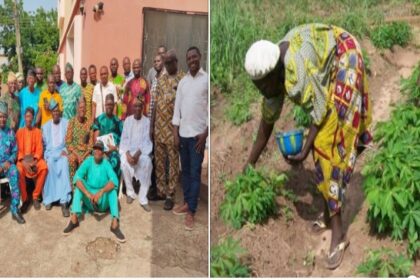
In a bid to tackle youth unemployment and promote sustainable environmental practices, public health professionals at the University of Ibadan have empowered young orphans with practical skills in organic waste recycling and sustainable agriculture.
The one-day workshop, held at the university’s Renewable Resources Centre, brought together 20 orphans between the ages of 18 and 30 for intensive hands-on training on converting organic waste into valuable agricultural products.

The initiative was facilitated by Taiwo Hammed of the Department of Environmental Health Sciences, College of Medicine, alongside public health professional Adeola Okeniyi.
According to the organisers, the programme forms part of the implementation of the Youth Empowerment Fund provided by the European Union and its development partners.
Participants were exposed to waste-to-wealth technologies under the circular economy model, with special emphasis on composting techniques and the production of organic fertiliser for sustainable farming.

Speaking during the training, Dr Hammed explained that the workshop was designed to help vulnerable youths develop entrepreneurial skills capable of generating income while contributing to environmental sanitation.
“We want to teach orphans how to make money from organic waste by converting it to organic fertiliser. This training will also help to solve the waste management problem in our society,” he said.
He noted that beyond creating employment opportunities, organic waste recycling offers a sustainable approach to addressing environmental pollution and improving soil fertility for agricultural productivity.
The facilitators stressed that empowering youths with practical and marketable skills remains critical to reducing unemployment and poverty in Nigeria, especially among vulnerable groups.
Observers at the workshop described the initiative as a timely intervention capable of inspiring young Nigerians to explore alternative career paths within the growing green economy and environmental sustainability sector.
Caption:
Young participants during a hands-on composting and organic waste recycling training at the University of Ibadan aimed at empowering orphans through sustainable entrepreneurship and agriculture.